Guides
What does a published case study actually give away about your home?
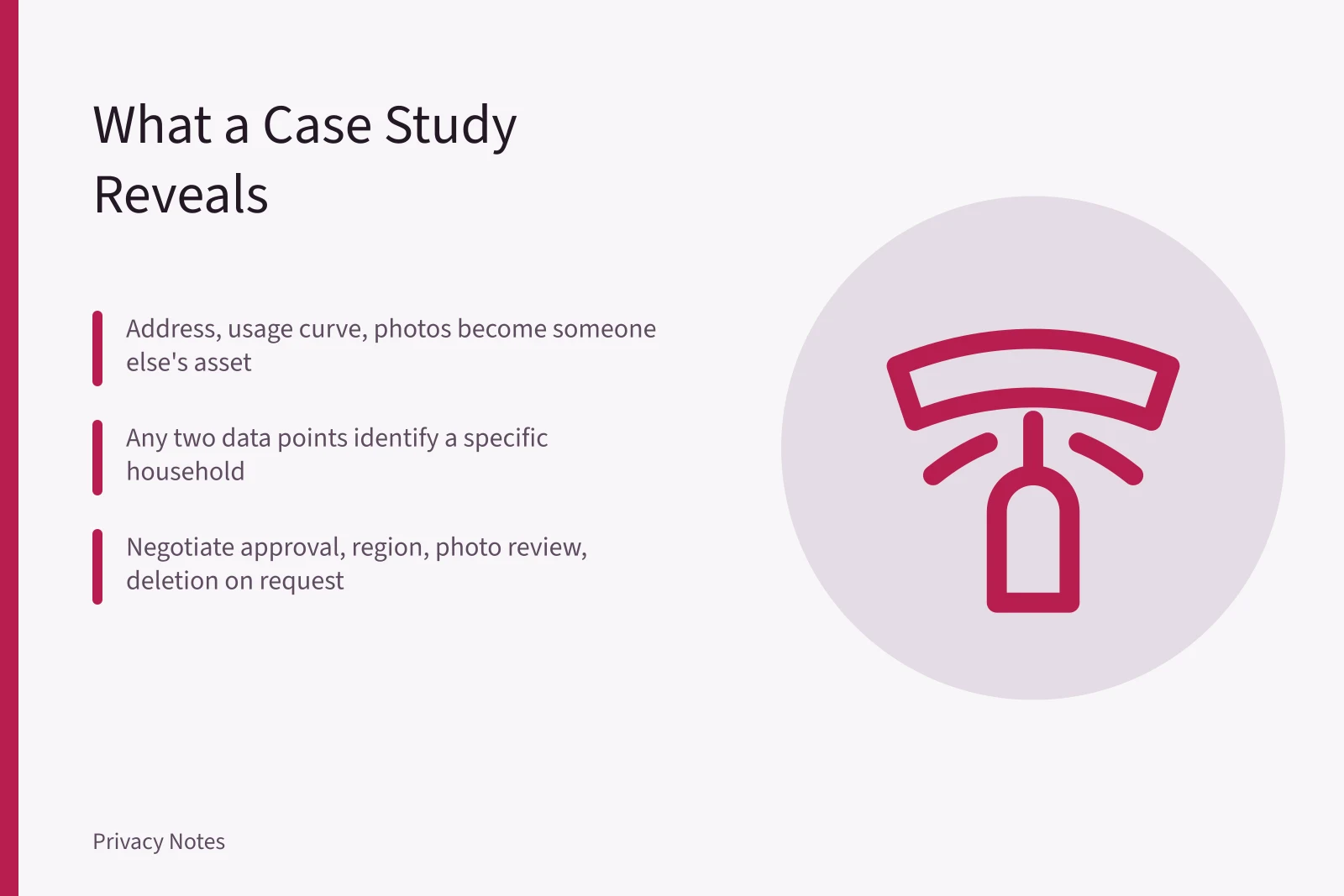
If you take part in a program case study, your address, usage curve and photographs become someone else's asset. What to redact and what to ask for.
Taking part in a case study feels like a small favor. In practice it hands a company or a program a package containing your address, your consumption curve, photographs of the inside of your house and often a quotation attributed to you by name. This article is about what to agree to and what to keep.
What to take away
- A consumption curve is identifying, even without a name attached.
- Photographs of interiors carry more than the equipment being shown.
- Approval of the final text should be a condition, not a courtesy.
- Ask how long the material may be used, and where.
What actually gets shared
A typical participation package includes:
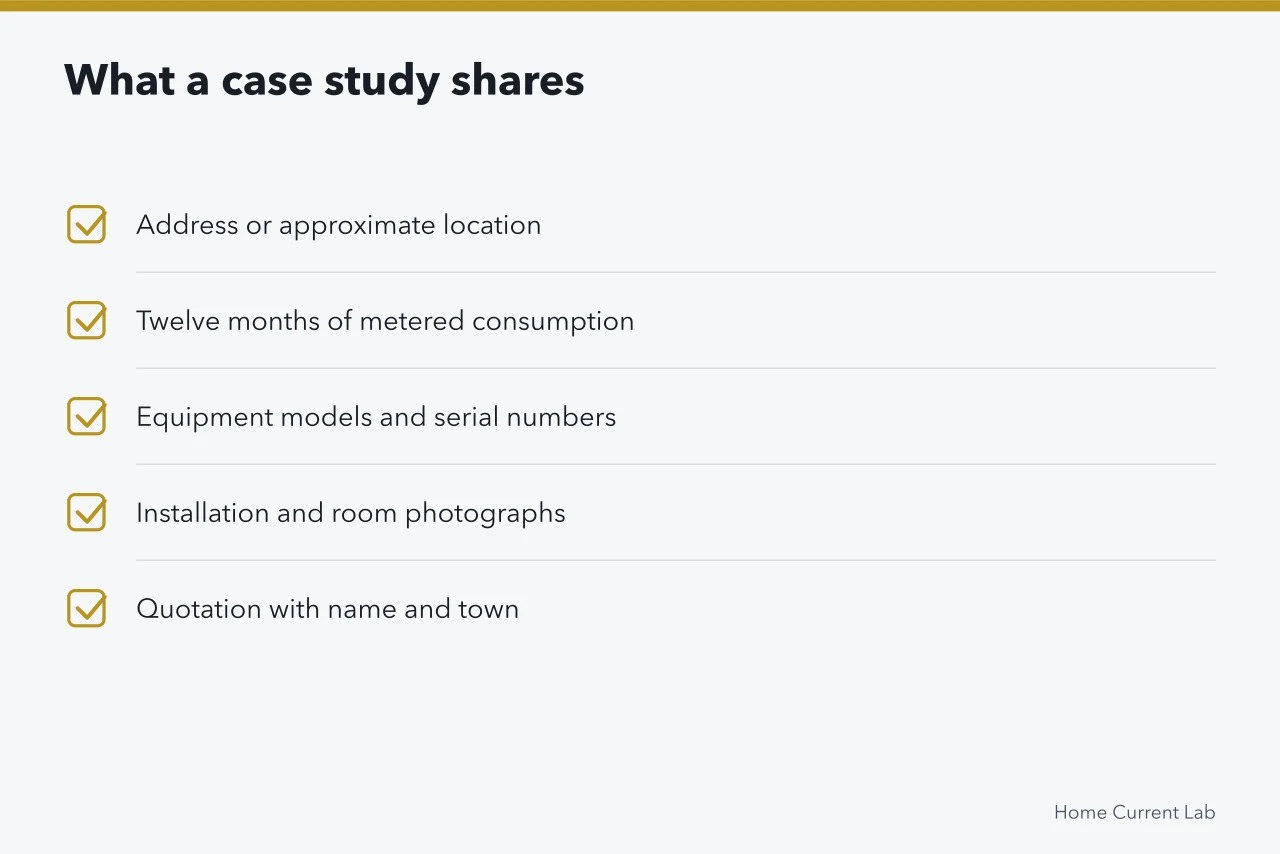
Any two of those together are usually enough to identify a specific household. Consumption data in particular is more identifying than people assume, because a load curve is close to a signature. Before you sign a release, ask how the company handles your data under its home energy contractor policies.
Consent is also usually broader than participants expect. The standard release grants perpetual, worldwide, sublicensable use of everything supplied, which means the material can appear in a manufacturer's marketing years later, in a country you have never visited, alongside claims you never made. That is not unusual drafting and it is not malicious, but it is worth reading before signing.
Where the data physically goes
Case study material lives in marketing systems, program archives and analytics platforms, which are themselves running in data centers. That is not a rhetorical point: EIA's reporting that data center server energy use is growing across the commercial building stock describes real buildings with real operators, and your household record is a file in one of them.
The same detailed data also feeds legitimate system analysis. The Department of Energy's North American Energy Resilience Model is an example of large-scale modeling built on detailed energy system information. That shows aggregated data has real public value even where individual records need protection.
Before sharing household data for that kind of modeling, homeowners should work through the questions worth asking before you sign for an electric home upgrade.
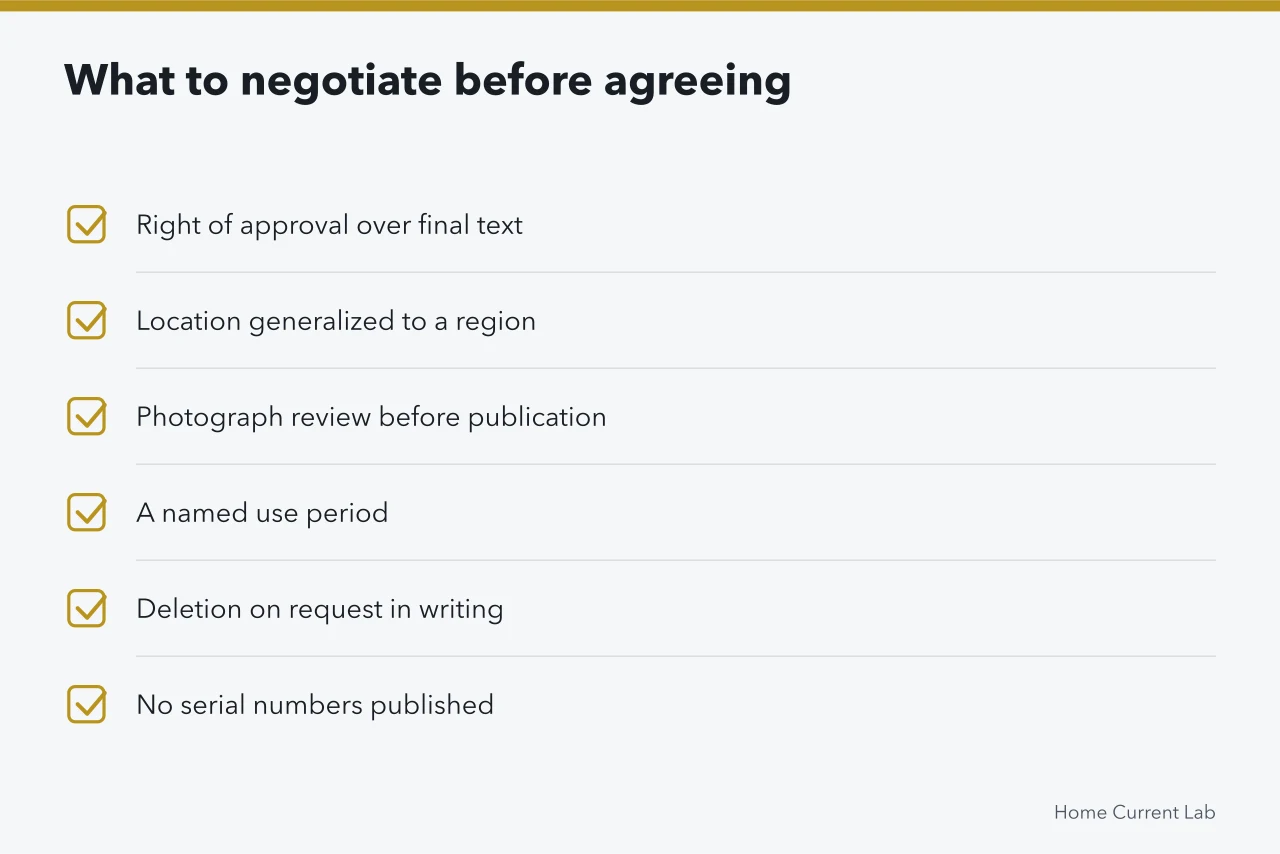
What to negotiate before agreeing
| Ask for | Why |
|---|---|
| Right of approval over the final text | Quotations get tidied into things you did not say |
| Location generalized to a region | Precise location plus consumption identifies a house |
| Photograph review before publication | Interiors show documents, medication, children's belongings |
| A named use period | Perpetual worldwide use is the default ask |
| Deletion on request | Ask whether it is possible, and get the answer in writing |
| No serial numbers published | They tie equipment to an address permanently |
The photograph review is the one people skip and later regret. A wide shot of a mechanical room routinely includes a wall calendar, a delivery label or a document on a bench.
If you publish your own
Some households write up their own conversion, which is genuinely useful to others. Redact the same categories: generalize the location, publish monthly totals rather than interval data, and crop photographs to the equipment.
You can be specific about decisions, sequencing and what surprised you without publishing anything that maps to your front door. The device-side version of this question is covered in our piece on privacy mistakes people make, and the evidence question in reading a case study properly.